
Amalie’s Hair Loss Journey with Lichen Planopilaris
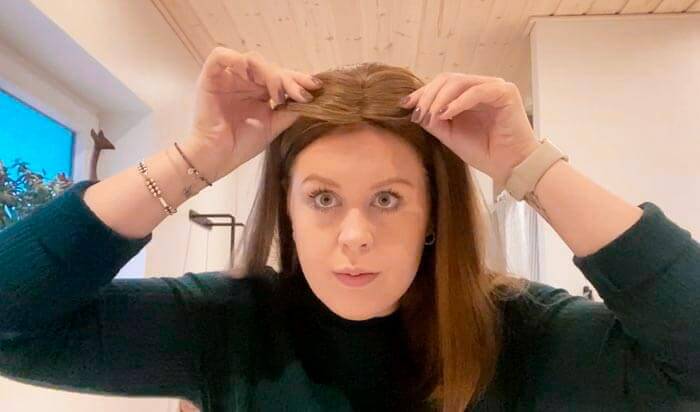
If you saw me on the street without my hair topper, you most likely wouldn’t think that I suffer from hair loss; you would probably just think that I have fine hair, like many other Scandinavian girls – and that’s completely okay. What people sometimes forget is that hair loss comes in many different forms: large and/or small, universal and/or in patches, permanent or temporary, and scarring or non-scarring.
For me, my hair loss journey began in April 2021, when I went to the doctor for the first time because I could feel that my hair was getting thinner and thinner. It had been going on for a long time, but I didn’t want to accept it. After several visits to my doctor, where the diagnosis changed each time from dandruff to fungal infection to psoriasis, I finally had enough and insisted on being referred to a dermatologist. This was in August 2021.
 |
 |
 |
I Received My Diagnosis
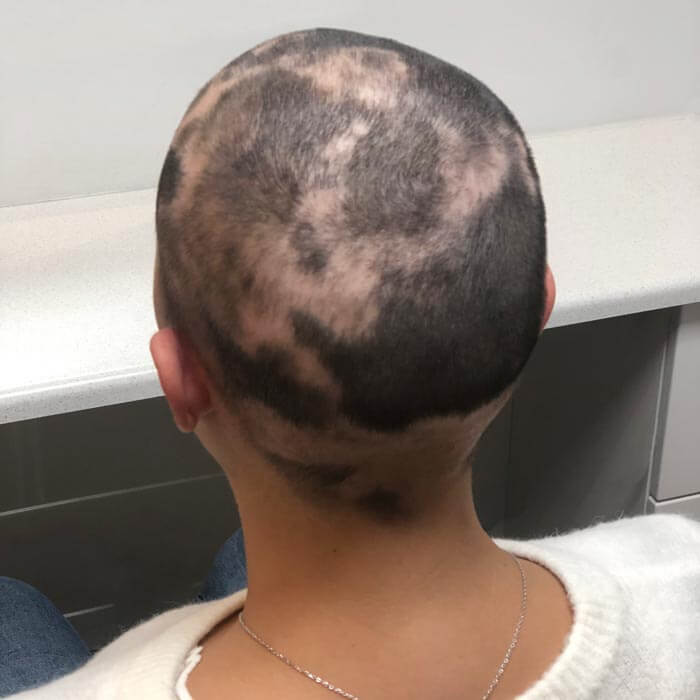
After finally getting a referral and an appointment, I visited the dermatologist on November 2, 2021. After just one visit and a biopsy, I was diagnosed with Lichen Planopilaris (LPP). LPP is an autoimmune disease that appears as white patches on the scalp, surrounded by small sores and significant redness. This causes the hair to be easily pulled out, which can easily happen since itching, pain, tenderness, and a burning sensation on the scalp are typical symptoms of the condition. I have experienced them all.
As a result of Lichen Planopilaris, the hair does not grow back, which leads to what is known as cicatricial alopecia (scarring and permanent hair loss). Lichen Planopilaris is a relatively rare autoimmune disease, but nevertheless it is one of the most common forms of scarring hair loss. The condition most often affects young women, but it still spans widely across age and gender.
The Pain Affected Me Severely
The itching and burning sensation on my scalp have been unbearable symptoms to live with. With the burning sensation, it is difficult to wear my hair up, but just as difficult to wear it down. Sometimes the sensation became so intense that I couldn’t get out of bed because of the pain. It also didn’t help my mental health that my hair kept falling out.
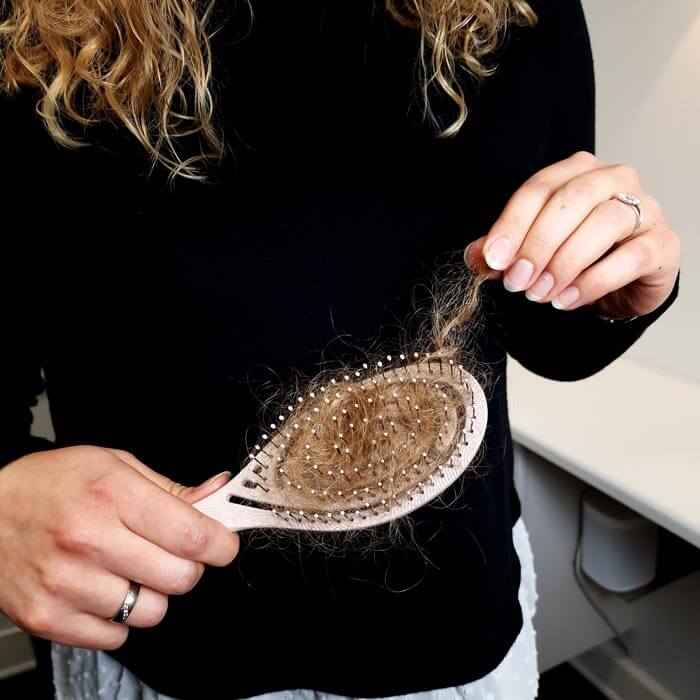
Since receiving my diagnosis, I have been treated with malaria medication (hydroxychloroquine) and later the immunosuppressive medication (methotrexate). Both are quite strong forms of medication with intense side effects. To monitor my body’s response, I have blood tests every month. In addition, I see my dermatologist every three months to reassess the amount of medication and to evaluate the condition of my scalp. At the moment, I am taking methotrexate while also using a liquid corticosteroid (Betnovate) every other day. These treatments have helped eliminate the burning sensation on my scalp, and the inflammation has clearly decreased. This also means that my hair loss is significantly less than when I was first diagnosed, and today I no longer lose entire clumps of hair when I run my fingers through it.
Nevertheless, the disease has caused significant hair loss. I have lost two-thirds of my own hair. Fortunately, I had very thick hair before I started losing it, so I still have a good amount of my natural hair left.
My First Wig Prescription
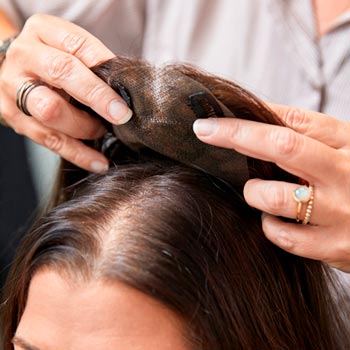
I experienced major hair loss at the back of my head, and in December 2021 I reached the point where I could no longer cover it with my own hair. I therefore decided to apply for a subsidy for a wig. I received my first prescription approval for a wig one month later, and already in February 2022 I had an appointment at Toftild to explore my options.