
You Can Have Mine. I Just Don’t Know How.
My name is Kiki, and today I live with alopecia and hair thinning.
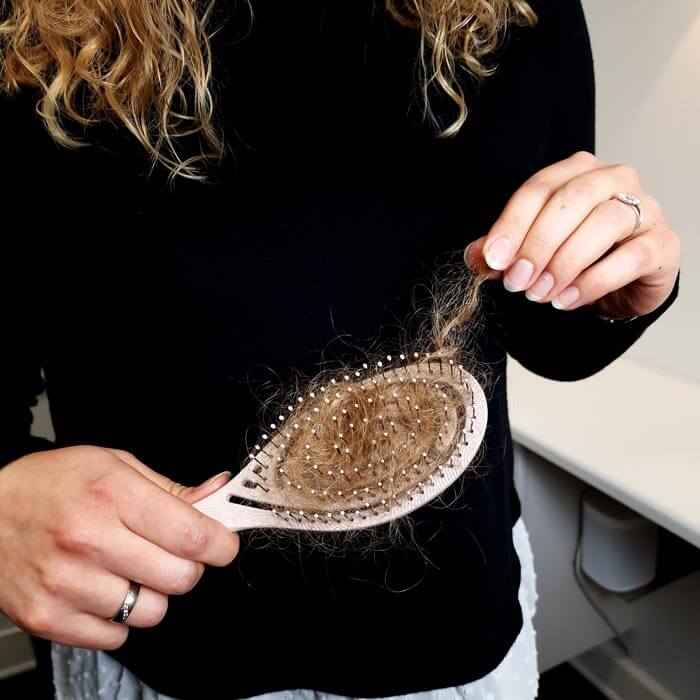
I first started noticing that something wasn’t quite the same in the spring of 2024.
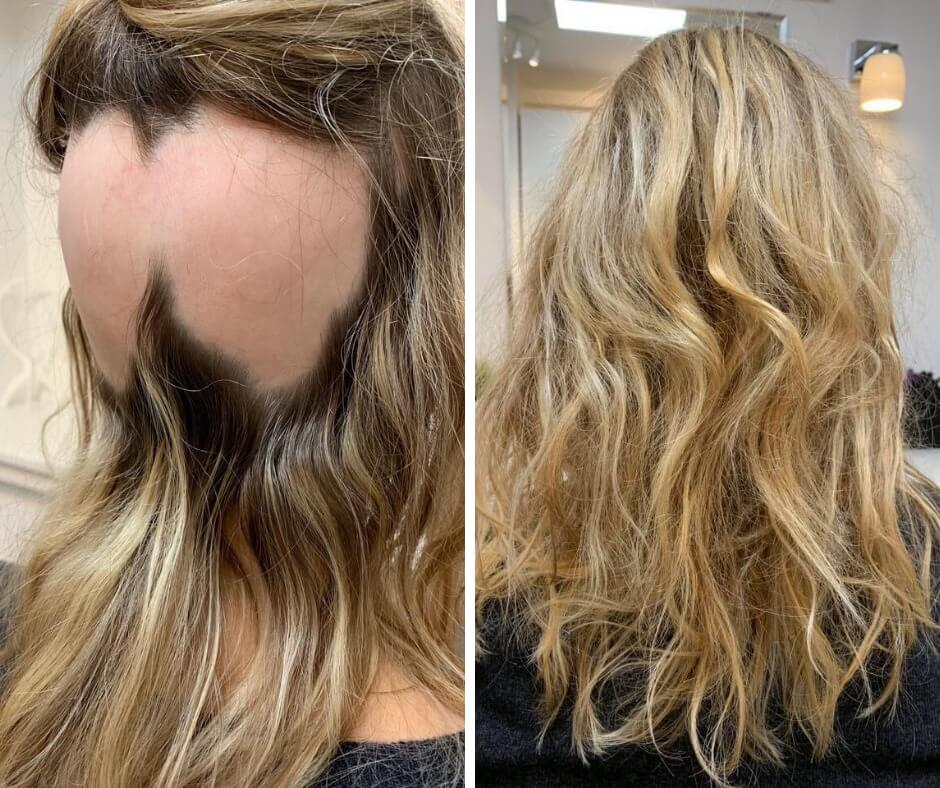
I was shedding a lot of hair, and when I was at the hairdresser, she discovered a small bald spot at the back of my head – about the size of a coin.
For a long time, not much happened. But during the summer of 2025, my hair began to thin noticeably, and the patch grew to around 9 x 9 cm. Later, I also discovered a smaller spot at my temple.
Fortunately, I’ve always had quite thick hair, so for now I can cover the areas with my top layers if I style it a certain way. But even if it isn’t necessarily visible to others, it still takes up space in my mind.
For example, I’ve developed a habit of wearing a cap when I’m going out where there will be lots of people.

When People React
When you tell others that you’re losing your hair, people react very differently.
Some say you just need to relax – that it’s probably stress and it will grow back. Others compare it to hair loss during pregnancy.
And then there are those who don’t really know what to say.
I’ve also experienced reactions that hurt more.
One time I hugged a friend. Afterwards, he complained that he’d gotten hair on his clothes – and it made me feel disgusting.
Another person said directly that I wasn’t that pretty to begin with – and that no one would want a bald girlfriend.
That comment stayed with me. In fact, it affected me so deeply that afterwards I stopped telling people about my hair loss.
Standing Alone with the Questions
At the same time, I realized how difficult it can be to find answers.
When your hair starts to change or fall out, it brings many questions – and not always clear explanations.
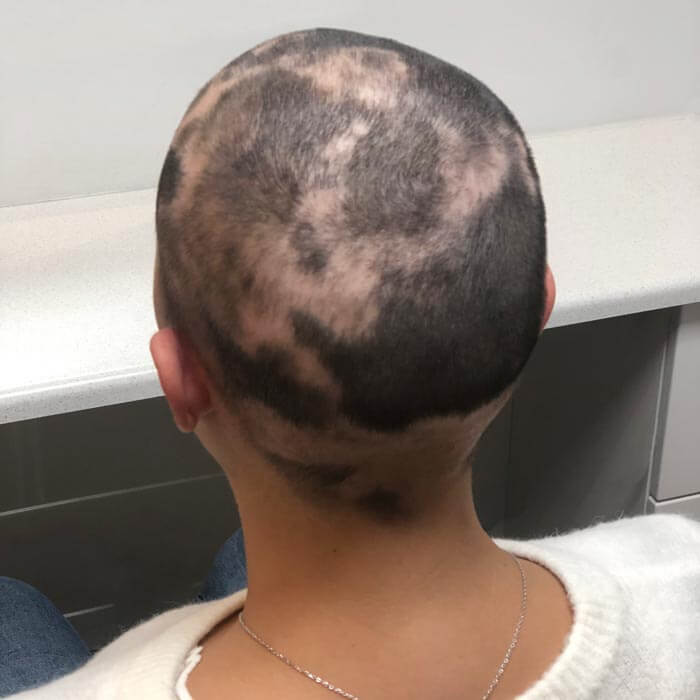
Eventually, I found out that what I’m experiencing is called alopecia, where hair can fall out in patches.
But even with that knowledge, I was still left with many questions.
And the feeling of being quite alone in it.
A Completely Different Reaction
Recently, I finally found the courage to tell a friend about my hair loss.
He happens to have the same hair color as me. The same length. Almost the same hair type.
When I told him, he just looked at me and said – without hesitation:
“You can have mine. I just don’t know how.”
My eyes filled with tears, and I went completely quiet.
Because sometimes support isn’t complicated.
It’s just a person who truly means what he says.
If My Story Can Help Others
I’ve chosen to share my story because I hope it can create a little more understanding.
Many people associate hair loss with either stress or cancer. But there are also other reasons why hair can change or start to fall out – including alopecia.
If my experience can make even a few people pause and think about how we speak to people experiencing hair loss, then it makes sense for me to share it.
- Kiki P.
Facts
What Is Alopecia?
Alopecia – also known as patchy hair loss (alopecia areata) – is a condition where hair can fall out in defined areas. For some, it is temporary, while others experience that the hair does not grow back.
In the video below, Nanna Lind explains more about what alopecia is – and what it can be like to live with hair loss.
Would You Like to Know More?
If you – like Kiki’s friend – have thought: “I’d love to help, I just don’t know how”, you can also find our hair donation guide here:
How to Donate Hair
Because one donation is not enough to create a hair solution for someone who has lost their hair.
It typically takes 4–6 donations.