
What is Trichotillomania?
Trichotillomania is a mental disorder related to obsessive-compulsive disorders, also known as OCD. It is a condition in which a person feels an irresistible urge to pull out their own hair. This can include hair from the scalp, eyebrows, eyelashes, or other areas of the body. Pulling out hair can lead to varying degrees of hair loss, which can be psychologically and emotionally distressing.
The name "trichotillomania" originates from the Latin words "trich" (hair) and "tillomania" (pulling out). It is also referred to as "hair-pulling disorder" or "compulsive hair pulling."

For some individuals, the condition occurs periodically or in connection with specific activities. Some people only pull their hair when they are stressed or experiencing anxiety. Others pull their hair while relaxing in front of the television or sitting with their phone. Generally, the hair pulling takes place when one is alone, and efforts are made to hide it from others.
What are the symptoms of trichotillomania?
- You repeatedly pull hair from the same area. Most often from the scalp, eyebrows, or eyelashes, but it can also be from other areas of the body.
- You feel a sense of tension before pulling out hair.
- You feel satisfaction or relief after pulling out hair.
- You eat some or all of the pulled-out hair.
- You play with the pulled-out hair or rub it against your face.
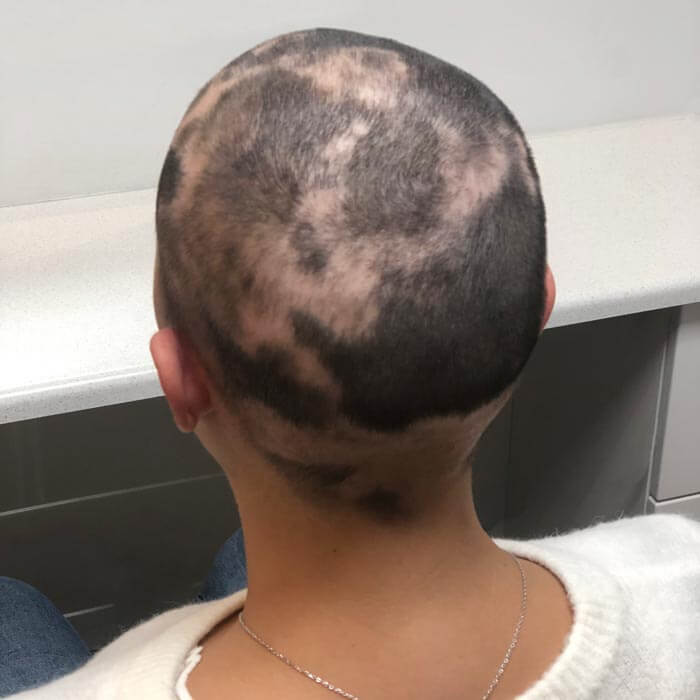
- You experience noticeable hair loss.
- You have areas with shortened hair or bald patches.
How is trichotillomania diagnosed?
You will typically need to see a dermatologist to have the areas of hair loss assessed. This is to ensure that the hair loss is not caused by another condition. The diagnosis of trichotillomania is made only after all other medical causes have been ruled out.
Consequences of trichotillomania
Constantly pulling hair from the same area can cause scarring, infections, and other damage to the skin in that area. It can damage the hair follicles and may have a permanent effect on hair growth in the affected area.
Treatment of trichotillomania
Trichotillomania is not just a bad habit; it is a genuine mental disorder, and it can be difficult to overcome without treatment. Treatment varies from person to person. For some, psychotherapy is effective; for others, a combination of therapy and medication helps, while some learn to manage the condition over time.
Those who are distressed by hair loss as a result of trichotillomania may find comfort in using alternative hair solutions to conceal bald patches. At Toftild, we often find that wearing a wig, hair topper, or custom-made hairpieces can have a preventive effect for people with trichotillomania. Quite simply, the sensation associated with pulling out hair does not occur if it is done in a wig or hairpiece. The urge decreases, and over time the impulse to pull out hair may be minimized or disappear.
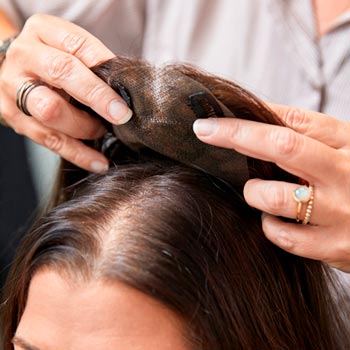
Depending on the extent of hair loss, we can help with either a wig, a hair topper, or a hairpiece made-to-measure from a template. Most often, there are one or more smaller areas on the scalp that can be covered with a custom-made hairpiece, which is attached using either dermatological tape or adhesive.
Financial support for hair solutions
If you have received a diagnosis related to your hair loss—whether it is trichotillomania, alopecia, or another condition that causes permanent hair loss—you may apply to your local municipality for a subsidy for alternative hair. Applications are submitted through your local municipal authority under “Application for personal assistive devices.” Lise Toftild can guide you through the process.