Alopecia: How Nanna’s Hair Loss Began
Cover photo: Photographer: Sara Skytte
Nanna shares her story about alopecia and how it all began. Watch the video above or read the story below.
My name is Nanna, and I have alopecia. Some people may know parts of my story, while others don’t know it at all. But I think very few people know my whole story.
For the past four years, I’ve tried to talk openly about it with family and friends, on TV and on social media—but it has only been parts of the story. I feel there is a need to tell the whole story if you truly want to understand the context and see all sides of the journey. So here it is.
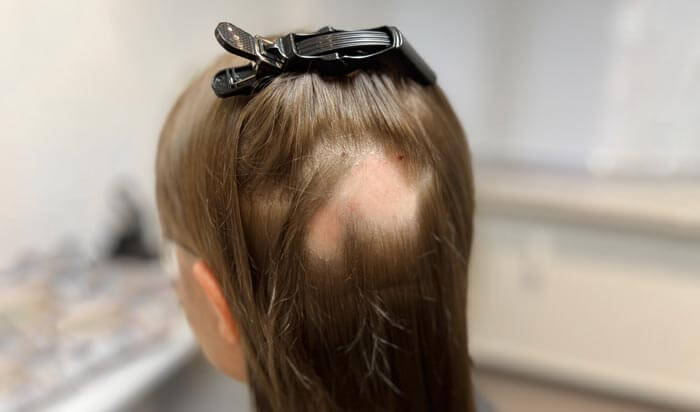
I was 13 years old, sitting in a summer house while my friend was braiding my hair on the couch. She noticed a small bald patch on my scalp where hair was missing. My friend and I have always been silly and joked about everything we could, so I mostly just remember us laughing about it.
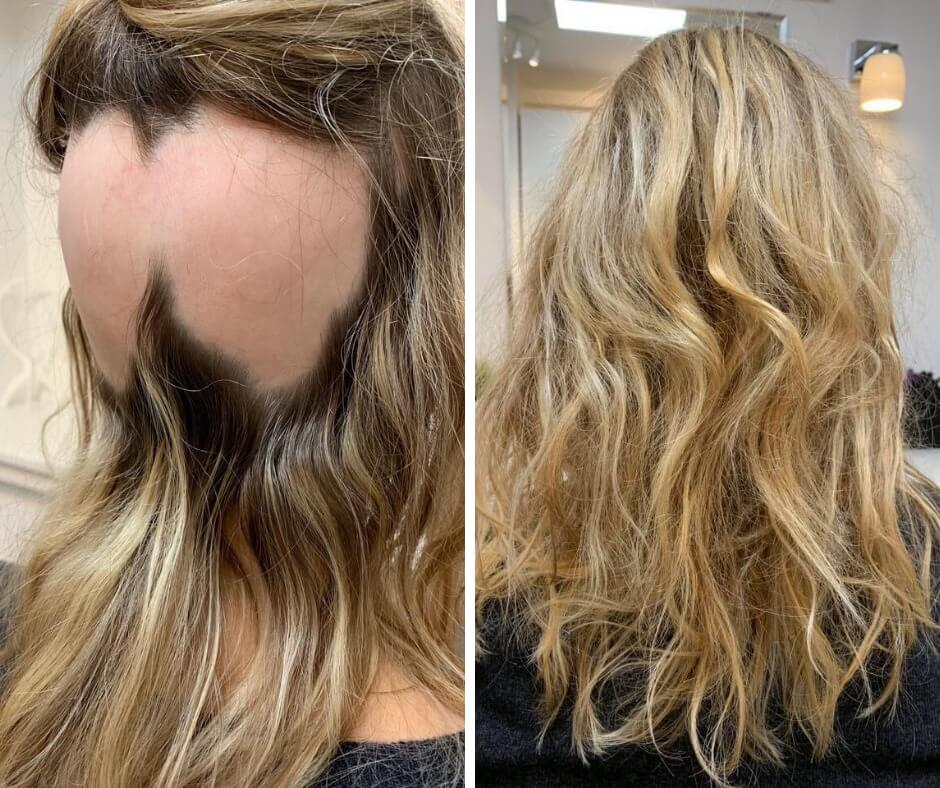
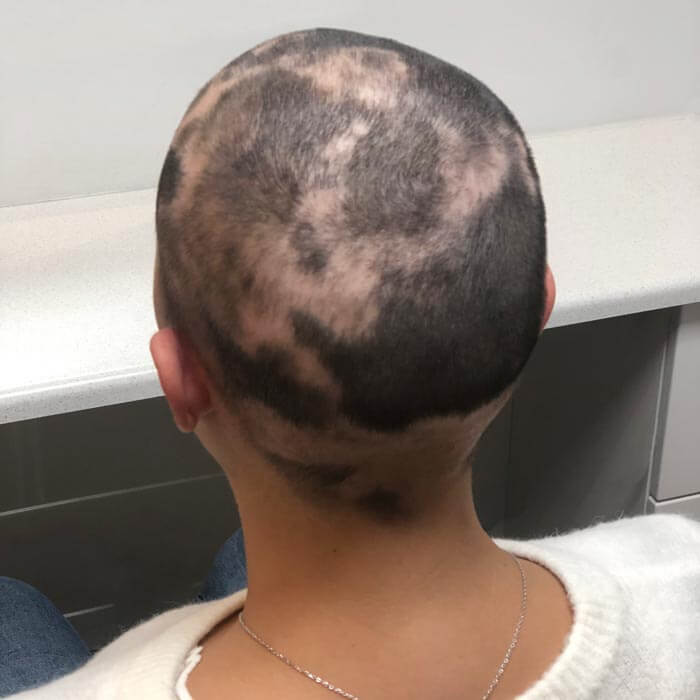
But within a relatively short time—just a couple of months—the patch started to grow. It was probably about the size of a coin. I wondered a little about what it could be. I wasn’t scared at that point because it wasn’t that big. I clearly remember showing it to my parents, and they were a bit annoyed because they thought I had done it myself. But I told them I hadn’t, and I don’t think they thought much more about it.
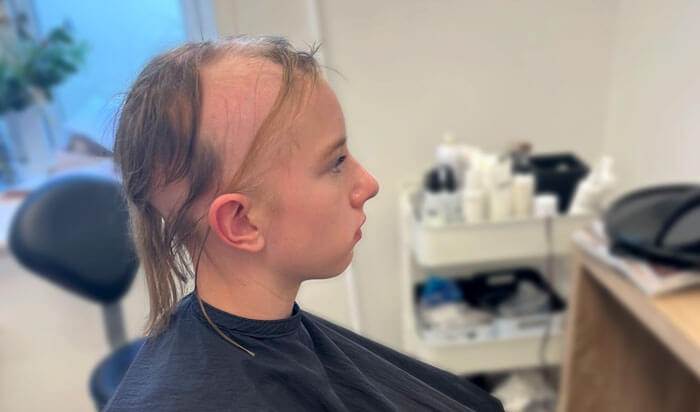
The patch that had been coin-sized multiplied and turned into several patches. It was only when more appeared that we started thinking something was wrong. It all happened within about half a year, so it went very fast.
My Hair Disappeared—But Where Did It Go?
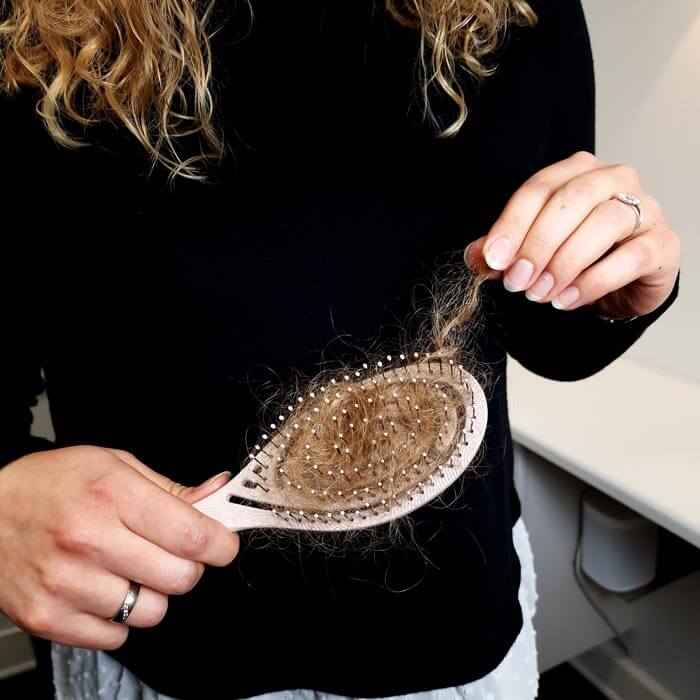
The strange thing was that the hair didn’t seem to go anywhere. I didn’t understand it because when I woke up, there wasn’t much hair on my pillow, and I couldn’t just pull it out either. It was most noticeable in the shower. That’s where you could see more hairs than usual falling out.
My mom decided to take me to a dermatologist. I had a test done on my back where they applied acetone—yes, acetone! It was to see if my skin could tolerate it. It could, so I had this acetone applied to the bald patches. The dermatologist said there was a 30–40% chance it would work and that the treatment might help my hair grow back.
I don’t think the dermatologist was 100% sure it was alopecia, but it was their best guess. The treatment didn’t work for me, and we started searching online, hoping to find an explanation for my hair loss. I could see that others online with alopecia had patches that looked like mine.
I also saw photos of people who were completely bald and had lost their eyebrows and eyelashes too. That scared me—what if that became me? The internet also said that going gluten-free might help, so I tried that for two months. It didn’t help either. Things were only going one way—downhill.
Humor and Positivity Helped Me Through
I truly believe both my family and my friends handled my hair loss journey really, really well. Humor and positivity have always been a big part of who I am and have helped me a lot throughout this process. Early on, I even gave my bald patch a name—Ole. It was a way for me to see it as a friend instead of something foreign and scary. But of course, it’s not fun having a bald patch like Ole—especially not as a teenager!
There were definitely bumps along the way. The hardest time was the uncertainty—not knowing where it would all lead. Neither the doctor nor the internet could give clear answers. Not knowing whether I might go completely bald soon, or lose my eyebrows and eyelashes, was a very uncomfortable feeling.
Corona Was a Welcome Break
I see myself as a very social, positive, and happy person who loves my classmates and my football teammates. But in 2020, when my hair loss spread and turned into more patches, I felt truly insecure for the first time. I was actually relieved when the Corona pandemic arrived, because it meant I could sit at home in front of a screen. With just a small picture in the corner, I could show myself from the front and not from behind—where the bald patches were visible.
I could hide behind the screen. The class I used to love showing up to every morning suddenly became a huge challenge once we returned to school in person. Even playing football—the sport I loved—became difficult. I didn’t want anyone to see my bald patches. No one was supposed to know I had them.
It wasn’t “normal” for a girl my age. I had always thought losing your hair was something that happened later in life—but I was just Nanna in eighth grade who wanted to keep her hair. Luckily, with my very creative family, I knew we would find a solution.
My Mom’s Creative Headbands
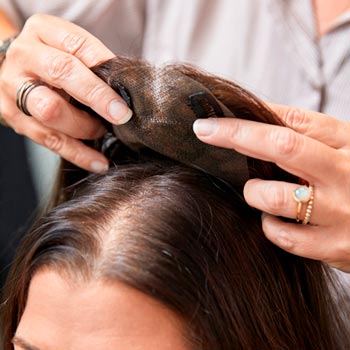
My mom bought 3–4 headbands and then went to Glitter to find some inexpensive hair extensions. She sewed them onto the wide headbands she had ordered. Suddenly, I had a headband with hair attached that could hide my bald patches. Of course, people wondered why I suddenly started wearing big, wide headbands from one day to the next. I would just smile and say it was because I wanted to change my style. But that wasn’t the real reason—and there wasn’t much to smile about.
At football practice, I was afraid someone would pull my hair and it would fall off. On social media, I was scared someone would notice if I didn’t hide it well enough. And during summer, I didn’t want to go swimming. I didn’t want to take off my bucket hat—but I also felt silly swimming with it on.
When I was coaching at a football camp, some of the kids asked if I had cancer. One child said I had a big forehead. But there was no harm in it—they were just curious children.
I think I was actually quite good at answering honestly when people asked. I would say it was patchy hair loss—alopecia—and even agree that yes, I did have a big forehead.
The Big Reveal
Eventually, I reached a point where I was tired of hiding it. It would be much less time-consuming if my followers on social media knew I had alopecia, because then I wouldn’t have to hide it anymore.
Through a casting my mom found on Facebook for DR Ultra, a small film crew came to my home. They were creating a series about young people who stood out in some way. This was my chance to finally reveal to everyone that I had alopecia. The film crew asked if they could film me sharing it on social media.
Usually, I don’t care what others think about me. But when I was about to upload the video, I was terrified of receiving hateful comments. Still, I did it—I posted the video.
It exploded! Completely—but in a positive way. The video was viewed more than 50,000 times by people I knew and people I didn’t know. Even public figures commented on it.
I felt so relieved, but also overwhelmed. Many of the messages I received were from people who also had alopecia. I had felt completely alone, but suddenly a whole new community opened up—and I realized that by sharing my story, I had helped others.
I later said yes to appearing on national morning TV after someone tipped off a TV host who saw my video. I also chose to go on stage at the Zulu Awards in 2021 and remove my wig in front of the audience.

I discovered that every time I opened up and talked about it, I felt less alone—because others opened up too. The best part was that the more I spoke about the positive aspects of having alopecia, the more I actually believed it myself. Talking openly makes it just as normal as talking about anything else.
The things you repeatedly do or say become more natural than the things you keep to yourself. I became better at seeing the advantages and gradually challenged myself—for example, taking out the trash without hair. Next time, I went to the supermarket. Eventually, I even went to high school without my wig for a day.
Getting a Wig Was One of the Biggest Days of My Life
Strangely enough, things became easier when I lost all my hair. There were no annoying strands left in between. I could simply be fully bald—and then get a wig that looked like my own hair.
Getting my first wig was one of the biggest days of my life. It felt like I could recognize the Nanna I was before discovering I had alopecia. But my first wig is a whole story in itself—that’s for another video.

My Hair Has Grown Back
Now a lot of my hair has grown back. I don’t know why or how. I’m happy about it, of course—but I’m still missing quite a lot. And that frustrates me! If some of it has grown back, why can’t the rest just return too? Still, my hair can now cover most areas, and I remind myself that it’s just hair.
It doesn’t change who I am. I’m still Nanna—I still play football, joke around, and am part of a community. I still have my values. I truly believe this entire journey has made me stronger. When I face other challenges in life, I may be able to handle them better than before.
Thank you for listening to my story. Feel free to write to me or to Toftild if you’re in a similar situation—or know someone who is.
Or if you simply want to share your thoughts. See you!
You can find Nanna’s Instagram profile here or by searching for @freestyle_linddd.